Ranking on the first page of search engine results pages (SERPs) is the ultimate objective for almost every website owner, digital marketer, and business operating online. Higher rankings lead to increased visibility, more organic traffic, greater brand credibility, and ultimately higher conversions. However, achieving and maintaining strong SERP positions requires more than just publishing content it demands a deep understanding of SEO (Search Engine Optimization) metrics and the right tools to measure and improve them.
One of the most widely discussed and closely monitored SEO metrics is Domain Authority (DA). While Google does not officially use Domain Authority as a ranking factor, DA remains an essential benchmark for evaluating a website’s overall SEO strength and competitive standing within its niche.
In this comprehensive guide, we’ll explore what Domain Authority is, why it matters, and the six best domain authority checkers you can use to analyze, compare, and improve your website’s performance. We’ll also discuss what constitutes a “good” DA score and share proven strategies to increase it over time.
What Is Domain Authority?
Domain Authority is a search engine ranking score developed by Moz that predicts how likely a website is to rank on SERPs. The score ranges from 1 to 100, with higher scores indicating a greater ability to rank competitively.
Domain Authority is calculated using multiple factors, including:
- The number of inbound links
- The quality and relevance of those links
- The authority of referring domains
- The overall link profile of the website
A new website typically starts with a DA score of 0 or very low, and the score gradually increases as the site gains backlinks from authoritative sources. Established websites with strong link profiles such as Wikipedia, YouTube, or major news outlets often have DA scores above 80 or even 90.
Although Moz created Domain Authority, several other SEO platforms have developed similar metrics using their own proprietary algorithms. These alternative metrics serve the same purpose: estimating a website’s authority and competitive strength in search results.
Why Domain Authority Matters for SEO
While Domain Authority is not a direct Google ranking factor, it plays a crucial comparative role in SEO. It helps you:
- Evaluate your website’s overall SEO health
- Compare your site against competitors
- Identify link-building opportunities
- Track the long-term impact of your SEO strategies
- Understand your site’s potential to rank for competitive keywords
Websites with higher domain authority generally find it easier to rank for competitive keywords, while low-authority sites must rely on less competitive terms or exceptionally optimized content.
Since the top three Google search results capture the highest click-through rates (CTR), improving your site’s authority can significantly increase organic traffic and brand exposure.
6 Best Domain Authority Checkers to Use in 2026
Below are six reliable and widely used tools that help you check domain authority and gain deeper insights into your website’s SEO performance.
Moz–Domain Authority Checker
Founded in 2004, Moz is one of the most trusted names in SEO. As the creator of the Domain Authority metric, Moz offers the most direct and widely recognized DA checker available today.
Key Features:
- Domain Authority (DA) score
- Page Authority (PA) score
- Spam Score analysis
- New and lost backlinks
- Referring domains overview
With a Moz Pro subscription, users gain access to advanced features such as:
- Bulk domain analysis
- Link profile comparisons for up to five competitors
- Keyword difficulty and optimization suggestions
- Site audits and rank tracking
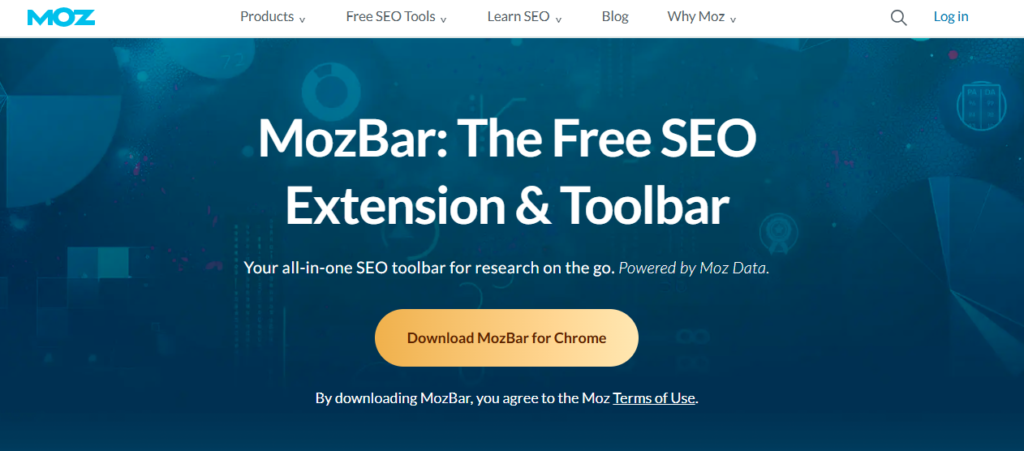
Moz also offers MozBar, a free Chrome extension that displays DA, PA, and backlink metrics directly in the SERPs. This is especially useful for quick competitor analysis while researching keywords.
Moz is ideal for beginners and professionals alike, thanks to its intuitive interface and authoritative metrics.
SEMrush – Authority Score with Competitive Insights
SEMrush is an all-in-one digital marketing platform used by SEO professionals, agencies, and enterprises worldwide. Instead of DA, SEMrush uses a metric called Authority Score, which serves the same purpose.
What SEMrush Offers:
- Authority Score calculation
- Organic and paid traffic analysis
- Mobile and desktop visibility reports
- Backlink audits and toxicity analysis
One of SEMrush’s biggest strengths is its competitive intelligence. It provides detailed reports such as:
- Main organic competitors
- Competitive positioning maps
- Branded vs. non-branded traffic trends
- Keyword overlap analysis
SEMrush also analyzes paid advertising data, allowing you to estimate competitors’ Google Ads spending and discover which keywords they are bidding on.
This tool is best suited for marketers who want a holistic view of SEO, Pay-Per-Click (PPC), content marketing, and competitive research in one platform.
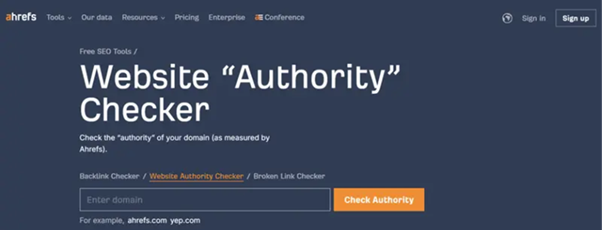
Ahrefs– Domain Rating (DR) for Backlink Strength
Ahrefs is widely regarded as one of the most powerful backlink analysis tools available. Instead of Domain Authority, Ahrefs uses Domain Rating (DR), which also ranges from 0 to 100.
How Ahrefs Calculates DR:
- Number of unique referring domains
- Authority of linking domains
- Distribution of outbound links from those domains
- Mathematical modeling of link equity
Ahrefs places a strong emphasis on backlink quality and quantity, making it a favorite among SEO professionals focused on link building.
However, it’s worth noting that Ahrefs’ DR does not account for:
- Traffic volume
- Domain age
- Spam signals
Despite this limitation, Ahrefs excels at backlink discovery, competitor link analysis, and keyword research, making it a powerful tool for advanced SEO strategies.
Majestic – Trust Flow and Citation Flow Metrics
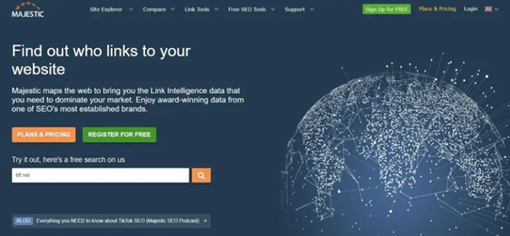
Majestic measures domain authority using two proprietary metrics:
- Trust Flow – Evaluates the quality and trustworthiness of backlinks
- Citation Flow – Measures the quantity of backlinks
Both metrics operate on a scale of 0 to 100 and provide valuable insight into a site’s link profile.
Why Majestic Is Unique:
- Focuses heavily on link trust and relevance
- Helps identify spammy or low-quality backlinks
- Offers detailed backlink history and topical trust flow
A healthy domain typically has a Trust Flow score that is equal to or higher than its Citation Flow score. If Citation Flow is significantly higher, it may indicate manipulative or low-quality link-building practices.
Majestic is particularly useful for SEOs who want to prioritize link quality over quantity.
Loganix– Free Multi-Source Domain Authority Checker
Loganix is a free tool that aggregates domain authority data from multiple trusted sources, including:
- Moz
- Ahrefs
- Majestic
- Google metrics
Instead of using a proprietary DA score, Loganix displays metrics from these platforms in one place, making it easy to compare authority levels using different standards.

Additional Loganix Services:
- Backlink audits
- White-hat link building
- Content creation services
Loganix is ideal for users who want quick insights without paying for multiple tools, as well as businesses looking for professional SEO services alongside free analysis.
SEO Review Tools – Beginner-Friendly DA Checker
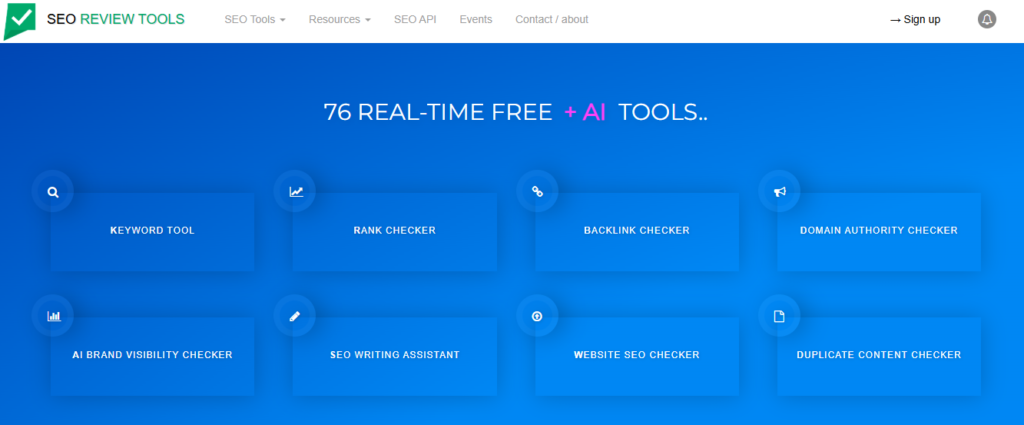
SEO Review Tools offers a simple, free Domain Authority Checker that is easy to use and accessible for beginners.
Metrics Provided:
- Domain Authority
- Page Authority
- Estimated website age
- Social media presence score
- Backlink overview
While it doesn’t offer the depth of paid tools, SEO Review Tools is excellent for:
- Quick SEO health checks
- Evaluating backlink opportunities
- Understanding basic site authority metrics
This tool is particularly useful for small businesses, bloggers, and SEO beginners who want actionable insights without complexity.
What Is a Good Domain Authority Score?
There is no universal “perfect” DA score. Domain Authority should always be viewed as a relative metric, not an absolute one.
For example:
- A DA of 25 may be excellent in a low-competition niche
- A DA of 50 may still struggle in highly competitive industries
General Benchmarks:
- Moz DA
- 40–50: Average
- 50–60: Good
- 60+: Excellent
- Ahrefs DR
- 30+: Good
- 60+: Excellent
- Majestic
- Trust Flow should exceed Citation Flow
Instead of chasing high numbers, focus on outperforming your direct competitors.
Proven Strategies to Increase Domain Authority
Improving Domain Authority is a long-term process that requires consistency, quality, and strategic planning.
- Publish High-Quality, Original Content
Well-researched articles, in-depth guides, case studies, and original data encourage authoritative websites to link to your content naturally.
- Become a Guest Contributor
Writing for reputable websites in your niche helps you earn high-quality backlinks and build brand authority.
- Get Listed in Trusted Directories
Local and industry-specific directories improve credibility, local SEO, and referral traffic.
- Monitor and Audit Backlinks
Use backlink checkers to identify toxic links and disavow them when necessary.
- Work with SEO Experts
Professionals can identify technical issues, optimize site structure, and implement advanced link-building strategies.
- Follow Google’s Guidelines
Stay updated with algorithm changes and avoid black-hat SEO practices that can harm your rankings and authority.
Final Thoughts
SEO may seem complex, but improving your rankings doesn’t have to be overwhelming. By understanding Domain Authority and using the right tools, you can gain clarity on where your website stands and what steps to take next.
Domain Authority growth comes down to earning trust, building high-quality backlinks, and consistently providing value to users. If you focus on quality over shortcuts, your website’s authority and rankings will steadily improve.
With patience, effort, and the right domain authority checkers, you’ll be well on your way to achieving the visibility and success your website deserves.

Mitesh Patel is the co-founder of 247 Digital Marketing, LawFirm Marketing and a columnist. He helps companies like Emerson and other top Fortune 500 compnies to grow their revenue.