
The peptide industry has expanded rapidly in 2026, with growing demand from researchers seeking high-quality compounds like Semaglutide, BPC-157, and TB-500 for legitimate scientific applications. However, as the market grows, identifying a reliable peptide supplier has become increasingly difficult.
Synthetic peptides are now widely used across pharmaceutical, biotechnology, and academic research settings. Beyond traditional biomedical applications, peptides are also being explored for their potential roles in mental health research, including studies related to mood regulation and cognitive performance.
Unfortunately, the surge in demand has also attracted unreliable vendors that operate without proper quality control standards. The defining factor between reputable suppliers and questionable sellers is transparency specifically, independent third-party testing and accessible Certificates of Analysis (COAs). Established companies back their products with stringent quality control processes and documented compliance practices.
Researchers should exercise caution when dealing with unverified suppliers that may offer impure, contaminated, or counterfeit products without validated testing. These risks can compromise both research integrity and safety.
Our objective is to simplify this complex marketplace by identifying suppliers that prioritize safety, verified purity, and transparent documentation.
In this review, dozens of peptide companies were carefully assessed based on purity benchmarks, testing standards, and overall reliability. The vendors highlighted consistently provide biologically active peptides supported by proper documentation, enabling researchers to purchase with confidence.
Leading peptide companies also emphasize their operational transparency often highlighting U.S.-based facilities and global shipping capabilities to further reinforce credibility and convenience for customers.
Key Takeaways
- Independent third-party testing, meaning HPLC for purity plus mass spectrometry for identity, is the minimum standard. Self-reported purity numbers are marketing, not proof.
- A COA is only useful if the lot number matches your product, the lab is named, and the test date is recent. Documents can be recycled or faked, so treat them as one signal among several.
- Regulatory risk is now a real business risk. Vendors that sell FDA-approved drugs such as semaglutide or tirzepatide under a “research use” label, or that make human-use claims, are the most exposed to enforcement.
- Very low prices, anonymous operators, brand-new domains, and crypto-only checkout are the clearest warning signs.
- Even good suppliers can ship a bad batch. Check each batch rather than trusting a brand.
- Independent third-party testing, meaning HPLC for purity plus mass spectrometry for identity, is the minimum standard. Self-reported purity numbers are marketing, not proof.
Introduction to Peptides
The peptide sector is experiencing significant growth, driven by increasing global demand for research and biotech applications. Peptides short chains of amino acids play a fundamental role in numerous biological processes. Biologically active and synthetic peptides have become central to pharmaceutical and laboratory research because of their ability to interact with cellular pathways and support the study of targeted therapeutic mechanisms.
As the industry expands, maintaining strict quality standards has become more important than ever. When purchasing peptides for research purposes, selecting a reputable supplier that emphasizes rigorous testing, verified purity, and transparent sourcing practices is essential. Reliable vendors provide comprehensive quality documentation to ensure consistency and research integrity. This section outlines the fundamentals of peptides, their importance in scientific investigation, and the key considerations for choosing a trustworthy peptide supplier in today’s competitive marketplace.
Research Peptides and Their Applications
Research peptides play a vital role in advancing pharmaceutical science, biotechnology, and medical innovation. Scientists use these compounds to study core biological processes, investigate disease models, and evaluate emerging therapeutic targets. Biotech-focused peptides are driving progress in modern drug development, prompting significant investment in advanced peptide synthesis and manufacturing technologies.
The scope of research peptide applications is extensive. They are widely utilized in drug discovery, vaccine research, diagnostic development, and regenerative medicine studies. Their adaptability makes them powerful tools for exploring complex cellular systems and designing targeted treatment strategies.
However, the reliability of any scientific outcome depends heavily on the quality and purity of the materials used. For this reason, sourcing research-grade peptides from reputable suppliers that follow strict quality control protocols is critical. Trusted companies implement comprehensive testing procedures to ensure each batch meets precise specifications and is free from contaminants, supporting accurate and reproducible research results.
Peptide Synthesis and Production
Peptide synthesis is a highly specialized process that requires advanced technical knowledge and modern laboratory infrastructure. Leading manufacturers in the United States and internationally utilize sophisticated techniques such as solid-phase peptide synthesis (SPPS) to produce high-purity peptides designed for research and pharmaceutical use. The manufacturing workflow typically includes sequential stages assembly, cleavage, purification, and final processing each conducted under strict quality management standards.
Continuous innovation drives progress within the peptide industry. Improvements in synthesis technologies and analytical capabilities allow manufacturers to enhance efficiency, consistency, and product quality. Comprehensive quality control procedures, including high-performance liquid chromatography (HPLC) and mass spectrometry analysis, are applied throughout production to confirm purity, composition, and structural accuracy.
By combining advanced facilities with experienced scientific teams, reputable peptide companies can consistently supply reliable, research-grade materials that meet the rigorous demands of modern scientific investigation.
How the Market Changed in 2026
Three shifts matter for anyone choosing a supplier this year.
Consolidation. Peptide Sciences’ closure in March 2026 removed the best-known name in the category. Coverage at the time put its monthly online sales in the millions of dollars. Many customers moved to other vendors at once, which strained support and testing at some of them.
Regulatory pressure. Enforcement has targeted vendors that blur the line between research chemicals and unapproved drugs. Proposed legislation in 2026 would restrict the sale of research chemicals that are biologically identical to FDA-approved drugs. Regulatory guidance on certain peptides has also been shifting, so check current FDA information rather than relying on older articles.
Imitators. New sites with aggressive pricing and polished branding launched quickly after the closure. Some had no verifiable business entity, no independent testing history, and no customer record.
Peptide Marketing: Why Claims Need Proof
Peptide marketing in 2026 only works when its claims can be checked. Search results for “best peptide companies” are crowded with posts written by sellers, affiliates, and agencies, and many rank the author’s own partners first. Knowing how to read that content is part of choosing a safe supplier.
How to read a vendor comparison article
- Check who wrote it. A comparison written by a seller, or by a site paid per click or per sale, is advertising even when it is written like a review.
- Look for a disclosure. Honest articles state any commercial relationship near the top.
- Look for evidence. Named labs, lot numbers, dates, and screenshots are stronger than adjectives such as “trusted” or “premium.”
- Check the date. Several 2025 lists still recommend vendors that have since closed.
- Cross-check rankings. If three articles share the same order, they may share the same source.
What compliant peptide marketing looks like
For brands and agencies, the same environment that changed buying habits has changed marketing. The approaches that tend to hold up are the ones that match what careful buyers already look for.
- Publish batch-specific COAs where visitors can open them without registering.
- Use research-only language, and avoid dosing instructions, personal results, or health claims.
- Disclose affiliate links, sponsorships, and paid placements.
- Write comparison content from first-hand evidence, and remove statements you cannot support.
- Review advertising and payment-processor rules before launching campaigns, since many platforms restrict drug-related and peptide products and their policies change often.
How We Evaluated These Vendors
We looked at five criteria. They are the same ones you should apply to any supplier, including ones not on this list.
1. Independent third-party testing
Look for COAs from a named, accredited outside laboratory, not in-house testing. A credible report includes HPLC purity and mass spectrometry confirming molecular identity, and it is specific to a batch. If you must email the vendor to see a COA, treat that as a yellow flag.
2. Manufacturing transparency
Is the vendor synthesizing in-house or reselling product from a wholesale source? Where is the facility? Can they describe their quality-control process? Claims such as “cGMP” or “USA-made” should be backed by details you can check.
3. Reputation across multiple platforms
Reviews that appear only on the vendor’s own site are weak evidence. Look for recent feedback from verified buyers in independent communities, and be wary of ratings that are glowing in one place and poor elsewhere.
4. Regulatory posture
Check for research-only language, no dosing instructions or health claims, a verifiable US business address, and no public FDA warning letters. FDA warning letters are searchable on the FDA website.
5. Operations
Tracked shipping, clear refund and replacement policy, responsive support, and payment methods with buyer protection. Credit card acceptance is a meaningful advantage over crypto-only checkout.
Biotech Peptides and Industry Trends
The biotech peptide sector continues to expand at a rapid pace, fueled by growing demand from research institutions and pharmaceutical developers. As scientific discoveries accelerate and applications for research peptides broaden, manufacturers are prioritizing innovation, scalability, and enhanced product quality. The United States remains a prominent leader in biotech peptide manufacturing, with many companies offering advanced synthesis technologies and comprehensive quality management systems.
Emerging industry trends include the integration of next-generation synthesis methods, increased transparency in quality assurance practices, and a stronger emphasis on meeting specialized research requirements. As the market becomes more competitive, evaluating a supplier’s technical expertise, production capabilities, and quality control standards is essential.
Selecting a vendor that emphasizes continuous improvement, documented testing protocols, and rigorous compliance practices helps ensure access to high-quality peptides. This commitment to excellence supports dependable research outcomes and ongoing advancement within the evolving peptide industry.
The 9 Peptide Companies Researchers Compare in 2026
Before the profiles, a few ground rules about how to read them.
This is not a safety ranking. Vendors are grouped by how much independently verifiable documentation we could find, not by a score. A company near the top has shown more of its work publicly. It has not been certified as safe.
Every detail is a claim until you verify it. Locations, catalog sizes, purity figures, and testing arrangements come from each vendor’s own public statements or from third-party coverage, and both change quickly. Treat each profile as a briefing that tells you what to check, not a conclusion.
Every profile follows the same framework, so you can compare like with like: who the company says it is, what it sells, what testing evidence is visible, how payment and shipping work, what its regulatory posture looks like, where the gaps are, and exactly what to do before a first order.
A reminder on scope. Research peptides are sold for laboratory use only. Most are not FDA-approved for human use, and nothing in these profiles is medical advice or a recommendation to use any compound personally.
1.Peptide Sciences
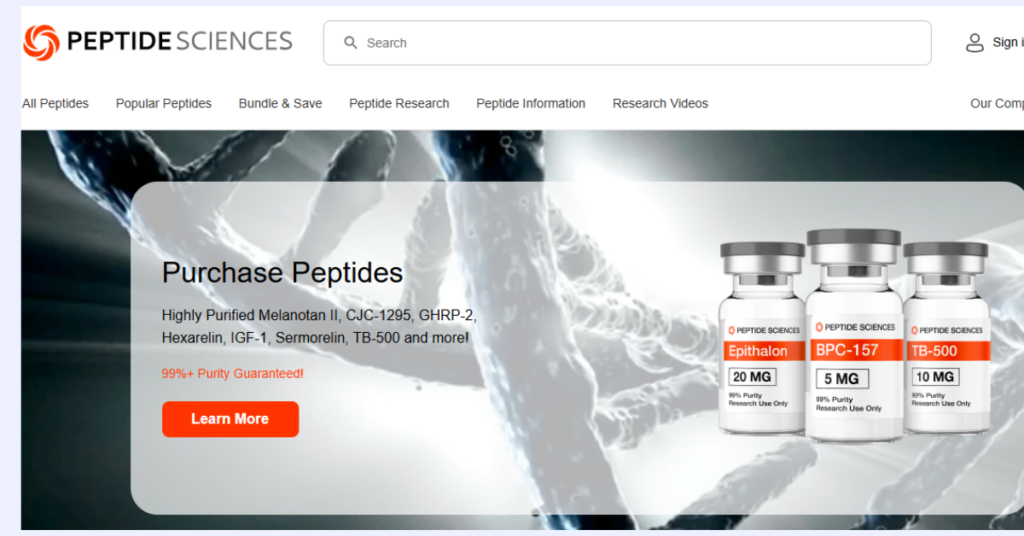
Peptide Sciences has built a strong reputation for premium-grade research peptides backed by rigorous quality control and independent third-party testing. Focused exclusively on research use, they emphasize purity, sterility, and consistency across their catalog. Each product is manufactured under strict standards and accompanied by detailed Certificates of Analysis (COAs), making them a trusted source for researchers who prioritize reliability and lab-verified quality.
Why Choose Peptide Sciences:
• Third-party tested batches with published COAs
• High-purity peptides manufactured under strict quality controls
• Consistent inventory of popular and specialized research compounds
• Secure packaging and cold-chain handling where required
• Strong reputation within the research community
• Dedicated focus on peptides (not a mixed supplement catalog)
What Stands Out:
Peptide Sciences is known for its uncompromising focus on purity and verification. Their commitment to batch testing and transparent documentation gives researchers confidence in product integrity and consistency. With a streamlined product line centered on high-demand research peptides, they’ve positioned themselves as a dependable supplier for serious labs that value quality assurance and reproducibility above all else.
2.Dragon Peptide:
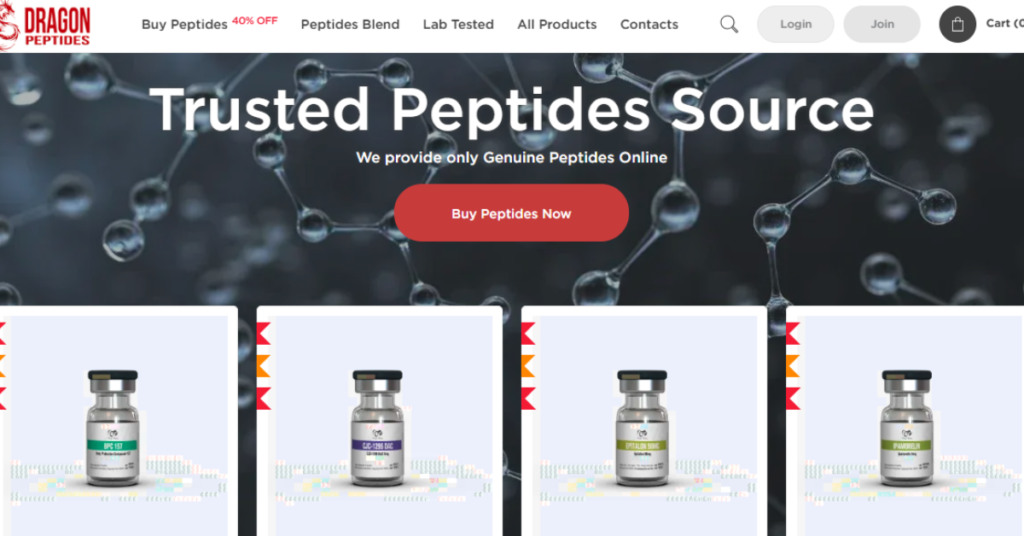
Dragon Peptide has positioned itself as a dedicated supplier of research-grade peptides, offering a wide catalog of high-purity compounds for scientific and laboratory use. With a focus on quality, transparency, and broad peptide selection, Dragon Peptide appeals to both experienced researchers and labs looking for reliable peptide sources for their projects. Many of their products are marketed as USA-manufactured and independently lab tested for verification.
What Stands Out:
- Extensive Product Range: Offers a diverse selection of research peptides including BPC-157, TB-500, Semaglutide, Retatrutide, Ipamorelin, Selank, PT-141, and more.
- Purity Claims: Products are stated to exceed ~99% purity, backed by lab testing documentation.
- Independent Lab Testing: Catalog peptides are supported with lab test results to confirm quality and authenticity.
- USA Presence: Listed business information indicates operations based in the United States (Albany, NY).
- Global Shipping: Domestic (U.S.) and international shipping options available to support researchers worldwide.
- Customer Support: Offers responsive support to help guide peptide selection and order assistance.
Our Experience:
After testing numerous peptide suppliers over the years, Dragon Peptide quickly caught our attention due to its broad product catalog and emphasis on lab verification. We decided to place a trial order to evaluate the overall experience from website navigation to product documentation and delivery reliability. The ordering process was straightforward, with clearly organized categories and accessible product information that made comparing compounds simple.
What stood out most was the availability of batch-specific testing documentation and the wide selection of research peptides, allowing flexibility for different project needs. Shipping was prompt, and communication from their support team was responsive and professional. Overall, Dragon Peptide delivered a smooth purchasing experience backed by solid documentation, making them a dependable option for researchers seeking variety and transparency.
3. Core Peptides
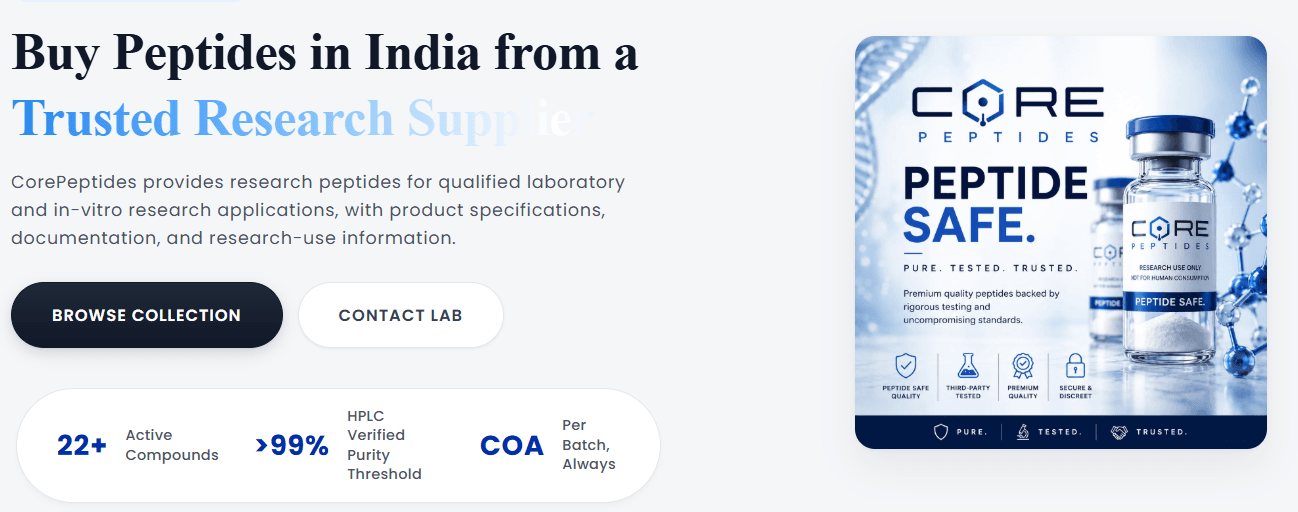
Best for: research content and documentation on every product page. Reported base: Orlando, Florida. Card payment: Yes. Testing signal: COA, HPLC, and mass spectrometry details on listings
Company overview
Core Peptides is based in Orlando, Florida, and is known for long, citation-heavy product pages. Rather than a short blurb and a price, each listing aims to give a reader the background literature, plus COA, HPLC, and mass spectrometry information. For people who want to read the underlying research before choosing a compound, it is one of the more educational sites in the category.
Why the format matters
Putting testing data on the same page as the research summary changes how you shop. You can read what a compound is studied for and examine the supporting evidence for the specific product in one place, without hunting through email threads. It also makes it easier to compare how thorough the documentation is from one product to the next.
What stands out
Product pages with study references, which let you check the source material yourself
Testing documents accessible from the listing rather than only on request
Credit card acceptance
An educational approach that suits careful, methodical buyers
Where to be careful
Good writing is not good chemistry. A site can be excellent at explaining a compound and still ship inconsistent product, so judge the supplier on testing evidence rather than its articles. Read study references critically too: a citation shows that research exists, not that it supports any particular claim. Make sure the educational content stays on the research side. Language that drifts toward personal use or outcomes is a compliance concern for any vendor.
Who it suits
Readers who like to review the literature behind a compound before buying and want testing data presented beside it.
Who may want to look elsewhere?
Buyers who care mainly about price comparison or the largest possible range, or who want an outside testing service to corroborate the vendor’s own data.
Before you order
- Compare the testing tab on the product page with the lot number on the vial when it arrives.
- Confirm the lab is named and the report is recent.
- Read the refund and replacement policy.
- Spot-check two or three study references to make sure they say what the page implies.
4. Swiss Chems
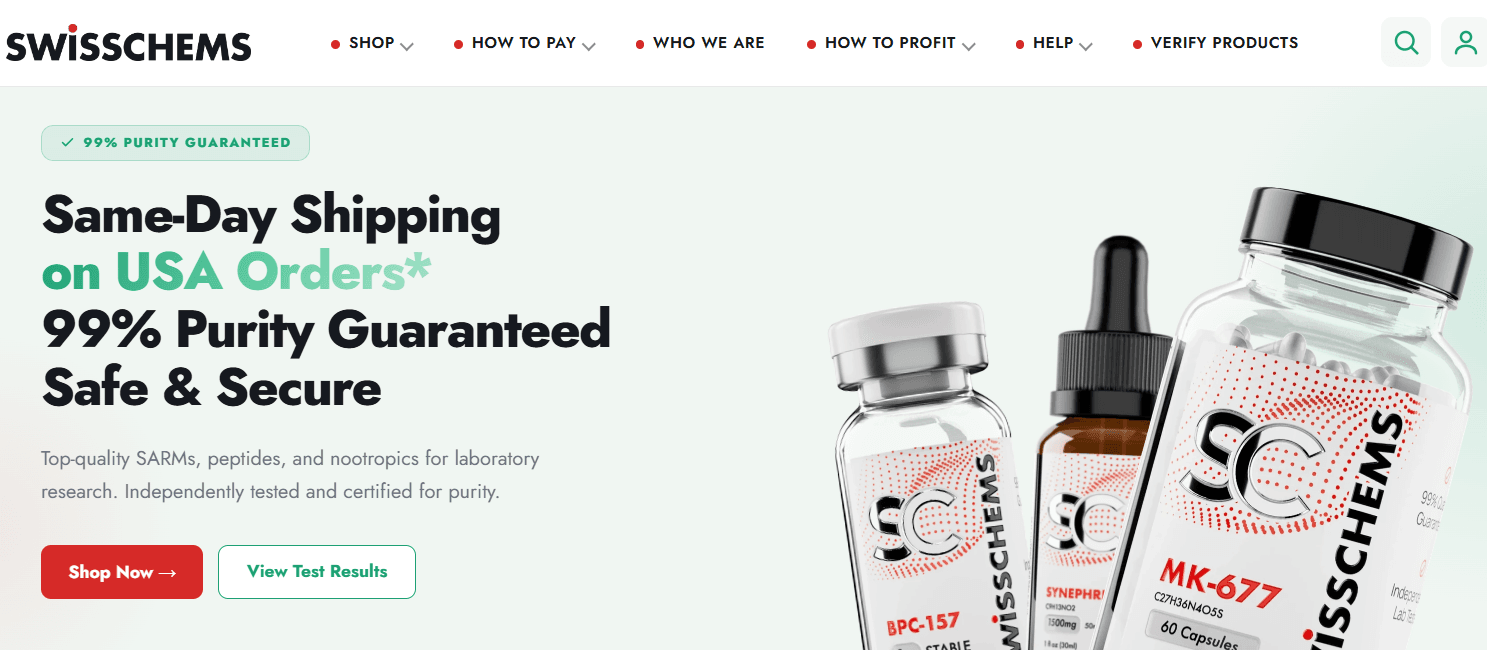
Best for: very broad catalog. Reported base: International Card payment: Limited Testing signal: HPLC-focused documentation, per third-party coverage
Company overview
Swiss Chems stayed in operation through the 2025-2026 consolidation and sells a wide range that includes peptides, SARMs, and related products. Its catalog is reported to have more than 100 items. It is generally described as competitively priced and offers several payment options. Its longevity through a period when other vendors closed is notable, though longevity alone is not a quality measure.
What a mixed catalog means
A catalog that spans peptides and other research chemical categories is a different kind of business from a peptide specialist. It can mean strong purchasing and logistics experience. It can also mean that some product categories carry more regulatory attention than others, and that attention can reach the whole company. For a careful buyer, the mix is a reason to read compliance language more closely, not a reason to dismiss the vendor.
What stands out
Operational continuity through the market shakeout
A very broad range, useful for comparing availability and pricing
Competitive pricing
Multiple payment options
Where to be careful
Third-party coverage describes testing documentation as HPLC-focused. HPLC tells you purity, not identity, so ask whether mass spectrometry results are available for your batch. Limited credit card support lowers your buyer protection and should push you toward smaller first orders and more careful record-keeping. Because the catalog includes categories with a history of enforcement actions in the wider market, avoid any listing that uses human-use language, dosing instructions, or personal-results claims.
Who it suits
Experienced buyers who understand testing documentation and want breadth and price comparison.
Who may want to look elsewhere?
Newcomers who rely on card protection, or buyers who want mass spectrometry confirmation as standard.
Before you order
- Confirm which payment methods carry buyer protection.
- Ask whether identity testing is available for your batch.
- Verify the business entity and operating address independently.
- Read the shipping and replacement terms, particularly for international delivery.
5. Peptide Vault
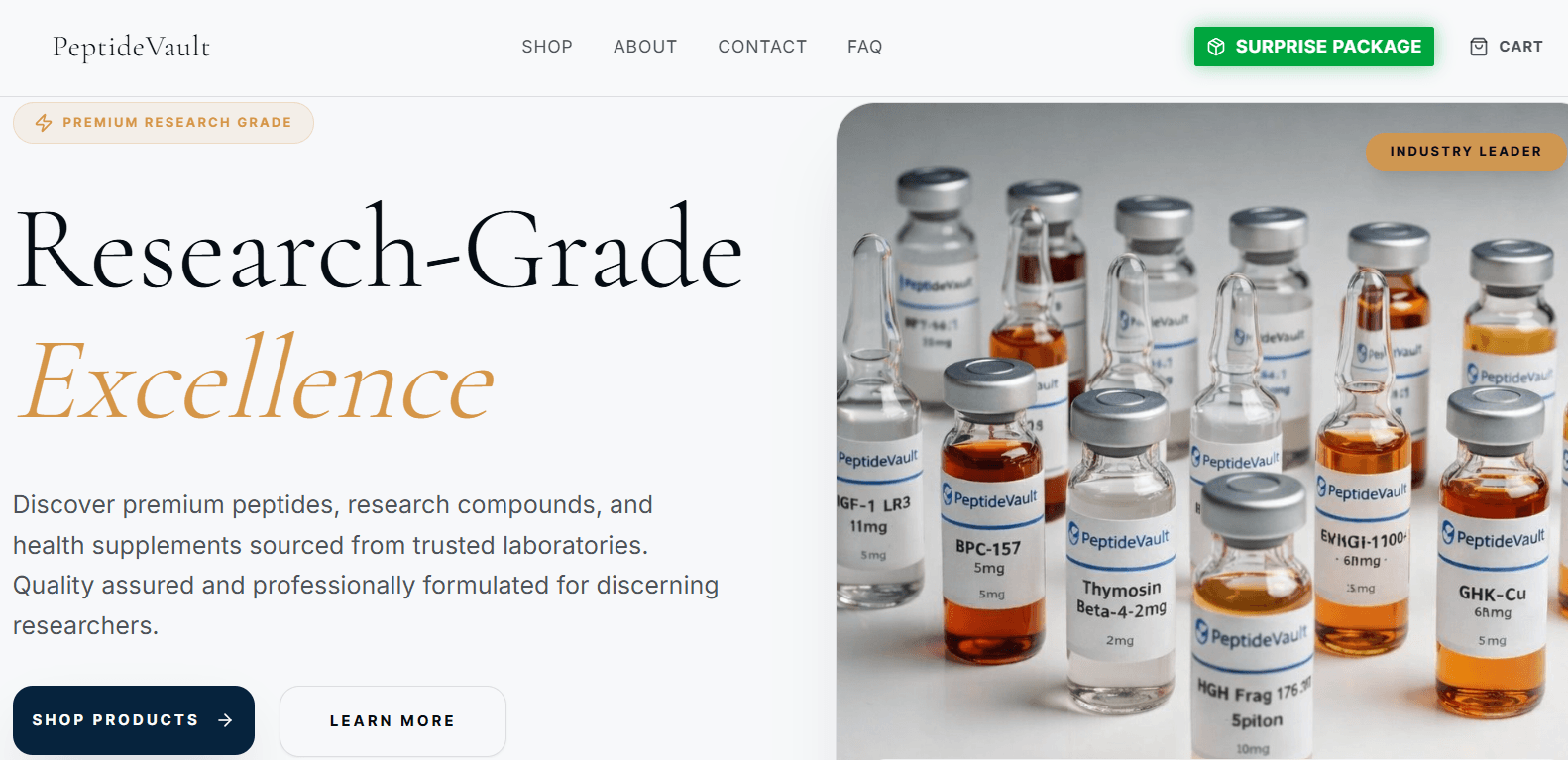
Best for: a curated catalog. Reported base: United States. Card payment: Check site. Testing signal: COAs reported as clear and transparent
Company overview
Peptide Vault is a newer entrant with a smaller, curated range. Community feedback has noted responsive support and clear COA practices. Because it is newer, its track record is shorter than those of the vendors above, which means there is less evidence about how consistent its product is across many batches and many months.
The case for a smaller catalog
A tightly selected range is easier to test well. A vendor with a limited list can concentrate quality control on fewer products and may hold stronger relationships with its producers. That is a principal advantage, but it only helps you if the vendor actually documents the work, which is why the documentation check matters more here than the size of the catalog.
What stands out
A focused product selection
Reported transparency on COAs
Responsive support, according to community feedback
Where to be careful
Newer vendors are exactly where look-alike risk sits, particularly after the March 2026 closure of Peptide Sciences, when many imitation sites appeared. Check the domain registration date, look for a verifiable business entity and address, and search for independent feedback outside the vendor’s own channels. Community praise can be coordinated, so weigh a few detailed, verifiable reviews above many short, enthusiastic ones. A short history also means limited long-term evidence on shipping reliability and complaint handling.
Who it suits
Buyers who prefer a smaller catalog and are comfortable starting with a trial order.
Who may want to look elsewhere?
Anyone who needs a long operating history or a very wide range under one account.
Before you order
- Check how long the domain has existed.
- Verify business details and read independent feedback.
- Keep the first order small and note how the vendor handles documentation and shipping.
Confirm payment protection before paying.
6. Peptide Partners
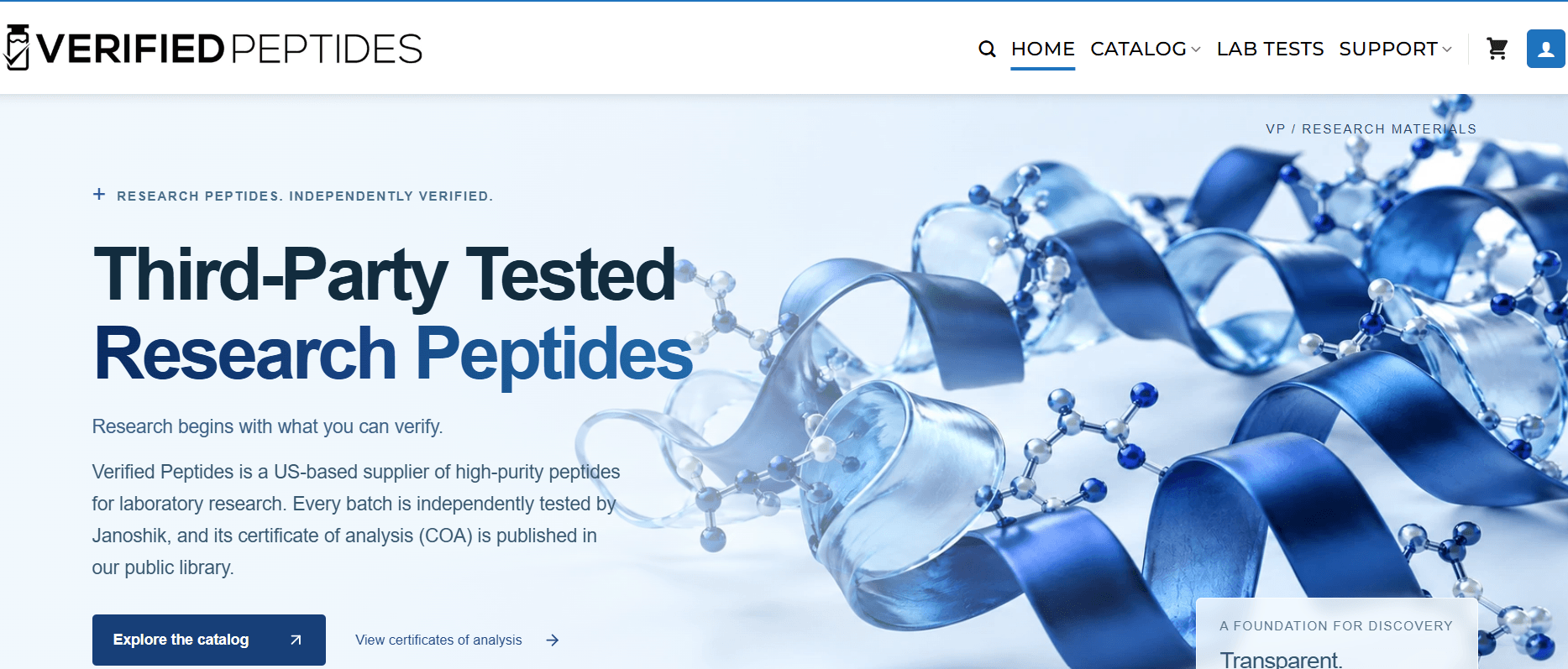
Best for: documentation depth. Reported base: United States. Card payment: Yes, according to third-party comparisons. Testing signal: Large public archive of lab reports
Company overview
Verified Peptides has built its reputation on one visible habit: publishing test reports where anyone can open them. In a category where many sellers make you email for a certificate, or show a single sample COA that may or may not relate to your batch, a searchable archive is an unusual level of openness. That is why it tends to appear at or near the top of comparison lists that prioritize transparency.
Why the archive matters
A public report library does several jobs at once. It lets you see how consistently the company tests across products rather than judging it on a single showcase document. It lets you spot formatting patterns, such as whether reports come from one lab or several, and whether the structure changes between products. It also creates accountability: reports that anyone can read can be checked, questioned, and compared against independent coverage.
What stands out
A large body of publicly viewable test reports that you can review before creating an account or spending money
Credit card checkout, which gives you dispute rights that crypto-only vendors cannot offer
A US operation, which makes business verification and shipping logistics more straightforward than offshore alternatives
Where to be careful
An archive proves the company tests something. It does not prove that the vial in your box was the one tested. The gap between “this product line has a report” and “this lot has a report” is where most documentation problems hide. Check whether reports carry lot numbers, whether those lot numbers follow a consistent format, and whether the date on the report is recent enough to reflect current production. An impressive archive can still contain older tests that no longer represent what is shipping today.
Also remember that a high number of reports says nothing about which tests were run. A report showing only HPLC purity confirms how much of the sample is one compound. It does not confirm that the compound is what the label says. Look for mass spectrometry or another identity confirmation alongside purity.
Who it suits
Buyers who treat documentation as the first filter, enjoy auditing reports, and want evidence they can read before committing.
Who may want to look elsewhere?
Anyone who needs the widest possible catalog, or who wants independent rating data from a separate testing service rather than the vendor’s own published reports.
Before you order
- Open the report for the exact product you want.
- Confirm the laboratory is named, and look up the lab itself.
- Check the test date.
- Match the lot number on the report to the lot number that will be printed on your vial.
- Read the replacement policy for product that arrives damaged or fails your own checks.
7. Peptide Hubs:
Peptide Hubs has built a presence in the research peptide space by offering a focused catalog of compounds commonly used in laboratory settings. The company emphasizes research-use-only products, clear labeling, and accessible documentation to support scientists and labs seeking consistent peptide sourcing.
What Stands Out:
- Focused Research Catalog: Offers a selection of popular research peptides and blends tailored to current scientific demand.
• Quality Documentation: Provides batch-related testing information to support transparency and verification.
• Research-Use Positioning: Products are clearly designated for laboratory research purposes.
• Streamlined Ordering Process: Website layout makes browsing and product comparison straightforward.
• Responsive Communication: Customer service is available to assist with order and product-related inquiries.
Our Experience:
After evaluating multiple peptide suppliers, Peptide Hubs stood out for its clean website design and easy navigation. The ordering process was simple, with clearly listed product details and accessible documentation. We found the checkout experience efficient, and communication regarding order confirmation and shipping updates was timely.
Overall, Peptide Hubs provides a smooth purchasing experience with an emphasis on research-focused products and transparency making it a practical option for laboratories seeking reliable peptide sourcing.
8. Biotech Peptides
Though still new to the research chemical scene, Biotech Peptides has quickly earned the confidence of researchers and even functional medicine practitioners. Built by a team of dedicated biochemists and entrepreneurs, their mission is simple: deliver premium-quality peptides without inflated prices. Perfect for beginners seeking variety with their impressive selection of 80+ peptides and blends.
What Stands Out:
- Beginner-friendly with excellent customer support
- Impressive variety: 80+ peptides and blends available
- U.S. Made: Produced in cGMP-certified facilities
- Purity First: Every product >99% pure
- Verified Testing: HPLC & Mass Spec validated
- Worldwide Shipping with knowledgeable support team
Our Experience:
After years of hunting for dependable suppliers, Biotech Peptides immediately stood out. Word-of-mouth was strong, so I placed an order and they didn’t disappoint. Their beginner-friendly approach, straightforward browsing, clear product details, and hassle-free checkout make them perfect for newcomers. Plus, with 80+ peptides available, they offer incredible variety for researchers who want options.
9. Pure Rawz
Pure Rawz is an excellent choice for those new to peptides or researchers seeking a reliable supplier with a strong community presence. They offer a wide range of peptides suitable for various research applications, coupled with educational resources to help beginners understand peptide use and handling.
Why Choose Pure Rawz:
- Beginner-friendly guides and support
- Consistently high purity levels verified by third-party labs
- Active community forums for user feedback and advice
- Wide range of peptides for various research applications
- Educational resources for newcomers
- Fast and secure US-based shipping
Our Take:
Their commitment to quality control ensures that all synthetic peptides meet rigorous standards, making Pure Rawz a dependable option for newcomers in the peptide world. The community aspect really sets them apart for researchers who value peer support.
Quick Comparison
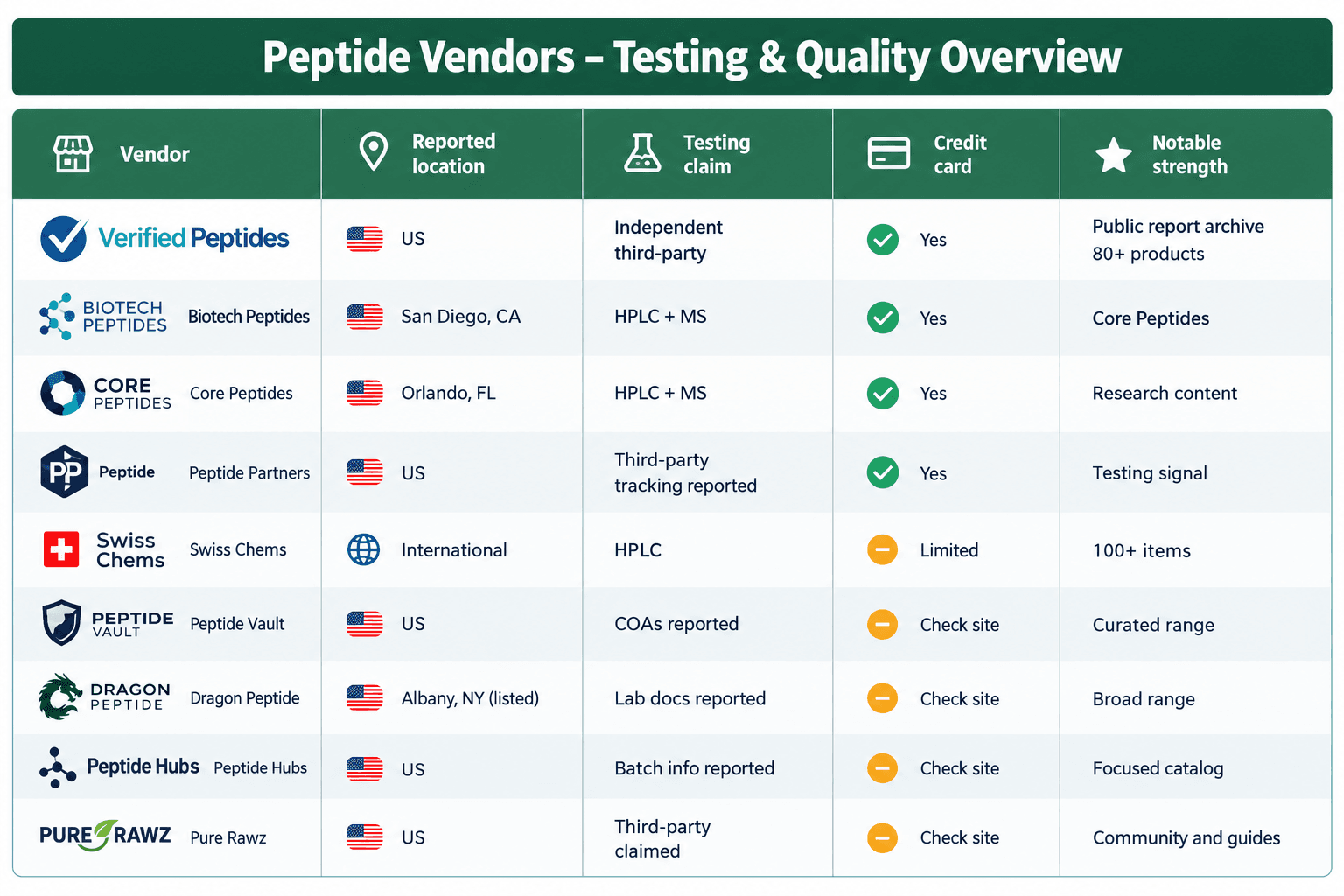
Based on vendor claims and third-party coverage; verify before ordering.
How to Choose the Best Peptide Company
Selecting a reliable peptide supplier is essential to maintaining research accuracy and consistency. When evaluating a company, consider the following factors:
- Quality Control and Purity: Reputable companies provide third-party Certificates of Analysis (COAs) confirming high purity levels often 95% or greater. Independent laboratory verification demonstrates product authenticity and integrity.
- Transparency and Documentation: Trusted vendors share comprehensive product details, including batch numbers, synthesis methods, and analytical testing data. Clear documentation supports compliance and traceability.
- Manufacturing Standards: Companies that follow Good Manufacturing Practices (GMP) and operate in certified facilities are more likely to deliver consistent, high-quality peptides.
- Product Range and Custom Services: Established suppliers typically offer an extensive catalog of biologically active peptides along with custom synthesis services to meet evolving research demands, including emerging areas of study.
- Customer Service and Shipping Reliability: Responsive support, clear communication, and secure, efficient shipping particularly from U.S.-based operations help ensure timely delivery. Safeguard your information by avoiding the exchange of sensitive personal or financial details through unsecured communication channels.
- Industry Reputation: Reviewing customer feedback, company history, and scientific community engagement can provide valuable insight into credibility and long-term reliability.
How to Verify a COA in Five Steps
- Find the lab. The report should name the testing laboratory. Look up the lab and confirm it exists and holds relevant accreditation.
- Match the lot number. The batch number on the COA must match the label on your vial.
- Check both tests. HPLC shows purity percentage. Mass spectrometry confirms the compound is what the label says.
- Check the date. Tests older than about 12 months, or a generic report reused across batches, are a concern.
- Look for consistency. The same PDF layout, identical numbers across different products, or missing signatures can indicate a template rather than a real report.
Note that standard COAs do not usually test for endotoxins or sterility, which are important for anything intended for injection. Their absence is a reason for caution, not reassurance.
Questions to Ask Any Vendor Before Your First Order
A reputable supplier will answer these directly. Evasive or slow answers tell you something too.
- Which independent laboratory tests each batch, and can I see an example report?
- Does the COA show the lot number that will be printed on my vial?
- Do you manufacture in-house, or do you resell from another producer?
- Where is the business registered, and can I see its address?
- How do you ship temperature-sensitive products?
- What is your refund or replacement policy if a product arrives damaged or fails testing?
- Which payment methods do you accept, and do any offer buyer protection?
- Have you ever received an FDA warning letter?
Risks of Purchasing from Unverified Sellers
The rapid expansion of the peptide market has led to an increase in unverified or counterfeit suppliers. Working with these sources can create significant risks:
- Impure or Contaminated Products: Without strict quality controls, peptides may contain impurities that compromise research validity and safety.
- Absence of Verified Testing: Vendors that fail to provide third-party COAs or analytical reports make it difficult to confirm purity and authenticity.
- Counterfeit or Mislabeled Compounds: Inaccurate labeling or fake products can result in ineffective experiments and wasted resources.
- Regulatory Concerns: Sourcing peptides from unauthorized suppliers may expose researchers to potential legal or compliance issues.
- Unreliable Customer Support: Poor communication and service can lead to shipping delays, lost packages, or inadequate handling guidance.
To minimize these risks, thoroughly vet each supplier, confirm independent testing documentation, and purchase only from companies with a proven track record of transparency and quality assurance.
What Price Tells You
Price is a signal, though not a reliable one on its own. Synthesis, purification, and independent testing all cost money, so a price far below the market usually means one of those steps was skipped. Vendor-run comparisons have cited roughly $30 to $50 for a 5 mg vial of a common compound at established suppliers, against $10 to $15 at suspiciously cheap sites. Treat those as vendor-reported, indicative figures and compare current prices yourself.
The reverse also holds. A high price does not prove quality, since some sellers simply add margin. Use price to spot outliers, then let the testing evidence decide.
Common Mistakes Buyers Make
- Trusting a ranking without checking the date. Several lists still include vendors that no longer operate.
- Accepting a COA at face value. Confirm the lab, the lot number, and the test date.
- Choosing on price alone. The cheapest listing is often the least verifiable.
- Skipping the small test order. A trial purchase shows you how the vendor handles shipping and documentation.
- Ignoring shipping conditions. Heat in transit can degrade a product that tested well at the source.
- Overlooking compliance language. Human-use claims and sales of approved drugs as research chemicals signal a vendor at risk of closure.
Storage and Handling (Laboratory Context)
Proper storage affects research integrity. Lyophilized peptides are generally kept frozen in sealed vials until use, and stability after reconstitution varies by compound. Follow the supplier’s documentation and published stability data for your specific material. Products damaged by heat in transit may be degraded on arrival, so ask about cold-chain handling.
Frequently Asked Questions
What makes a peptide company trustworthy in 2026?
A combination of independent third-party testing with batch-specific COAs, transparent manufacturing information, a verifiable US business presence, consistent feedback across multiple platforms, and research-only positioning. No single factor is enough on its own.
Is it legal to buy research peptides online?
Purchasing materials for legitimate laboratory research is generally lawful, but selling or using them for human consumption is not permitted for products that lack FDA approval. Rules are evolving, so check current FDA guidance and your local regulations.
Are research peptides safe for personal use?
They are not approved for human use, are not made to pharmaceutical standards, and independent testing has found accuracy and purity problems in parts of this market. If you are interested in a peptide-based therapy, talk with a licensed clinician about approved options.
How can I tell if a COA is real?
Confirm the lab, match the lot number, check the date, and be suspicious of generic or reused documents. When in doubt, ask the vendor which lab produced the report and contact that lab directly.
Should I buy from a new vendor?
Be cautious. Legitimate suppliers take time to build testing relationships and customer history. If you try one, start with a small order and verify the documentation first.
What is the difference between in-house and rebranded peptides?
In-house manufacturers control synthesis through quality testing and can usually document their process. Rebranders buy wholesale and resell, which adds variables. Neither model guarantees quality without independent testing.
What does “research use only” mean?
It means the seller states the product is intended for laboratory work and not for human or animal consumption. It does not mean the product has been tested for safety, and it does not make personal use appropriate.
What is the difference between HPLC and mass spectrometry?
HPLC reports how much of a sample is the target compound, which gives a purity percentage. Mass spectrometry confirms molecular identity. A useful COA includes both.
Can I trust vendor comparison articles?
Use them as a starting point only. Many are written by sellers or paid affiliates. Check for a disclosure, a named testing lab, and a current date, and verify claims directly with the vendor and the lab.
What is peptide marketing, and why does it matter to buyers?
Peptide marketing is how suppliers promote their products and how comparison sites present them. It matters because persuasive content can look like independent advice. Buyers who understand how it works can separate documented evidence from sales language.
Conclusion
The 2026 shakeout showed that a famous brand can disappear overnight and that polished marketing is cheap. The suppliers most likely to last are those with independently verifiable testing, transparent operations, and a compliant, research-only approach. Use the nine vendors above as a starting point for your own due diligence, not as an endorsement, and apply the checklist to every order.
For businesses in this space, the same lesson applies. Strong peptide marketing depends on proof the audience can verify: published testing, honest comparisons, compliant language, and clear disclosures. Brands that build on those foundations are better placed to last through the next round of regulatory change.

Mitesh Patel is the co-founder of 247 Digital Marketing, LawFirm Marketing and a columnist. He helps companies like Emerson and other top Fortune 500 compnies to grow their revenue.