
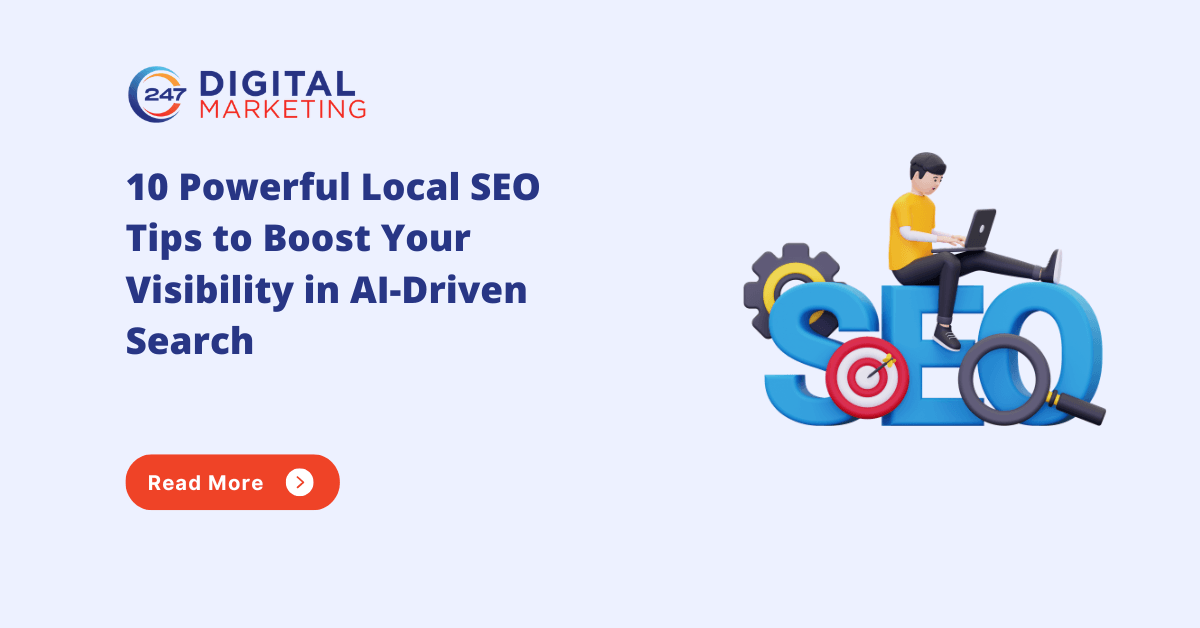
Local search engine optimization (SEO) is evolving rapidly as Google expands AI Overviews and AI Mode into everyday search results. Instead of relying solely on traditional rankings, users are now presented with AI-generated summaries reshaping how they discover local businesses. Businesses working with a Digital Marketing Agency in USA are already adapting faster to these AI-driven changes.
According to a Whitespark study, AI Overviews combined with AI Mode appeared in 57% of local search queries, highlighting how frequently AI-driven results now influence visibility and customer discovery.
For local brands, this shift means one thing: you need to understand how artificial intelligence evaluates and selects businesses to feature. Adapting your strategy is no longer optional, it’s essential to staying visible where your customers are searching.
In this blog, we’ll walk you through practical, up-to-date local SEO tactics designed specifically for today’s AI-powered search landscape.
Tip #1: Optimize Your Google Business Profile
Your Google Business Profile is the foundation of any successful local SEO strategy in an AI-driven environment. Search systems rely heavily on this profile to verify key business details such as services, categories, and location accuracy.
A complete and well-optimized profile sends strong signals of credibility, relevance, and trust, increasing your chances of being featured in AI-generated search results.
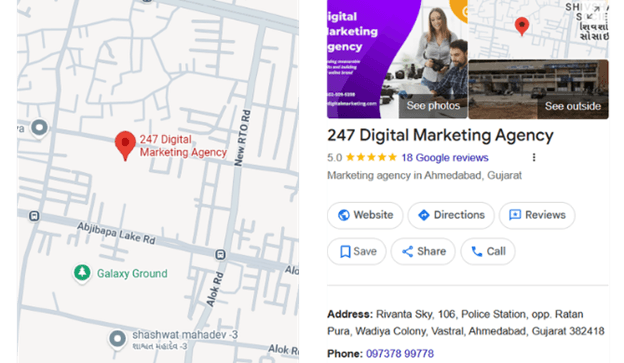
Optimizing your Google Business Profile for AI-driven SEO isn’t a one-time task, it requires consistent, ongoing management. To stay competitive, follow these best practices:
- Choose the most accurate primary category along with relevant secondary categories.
- Write clear, detailed service descriptions that reflect your actual offerings.
- Keep business hours, contact information, and attribute up to date.
- Regularly upload high-quality photos that showcase your current operations.
- Respond to customer reviews promptly and professionally.
- Publish posts to demonstrate that your profile is active and maintained.
- Monitor for changes and update information whenever needed.
A consistently updated profile helps search systems better understand your business, improving how it’s evaluated and prioritized in AI-driven local results. Ongoing optimization builds trust and credibility both critical as AI plays a bigger role in how users find local businesses.
Tip #2: Focus on Local Keyword Research
Local keyword research has evolved in the age of AI-powered search. Instead of relying heavily on exact-match keywords, AI systems prioritize user intent, context, and natural language queries.
Today, successful keyword strategies focus on how people search using conversational, location-specific, and problem-based queries. This includes long-tail phrases and voice-style searches that reflect real user behavior. Many businesses partner with an experienced SEO Company in New York to better understand and implement these advanced keyword strategies.
Rather than chasing individual rankings, businesses should align their keywords with local intent, services, and customer needs. Understanding what your audience is truly looking for and how they ask for it now matters far more than simply targeting specific phrases.
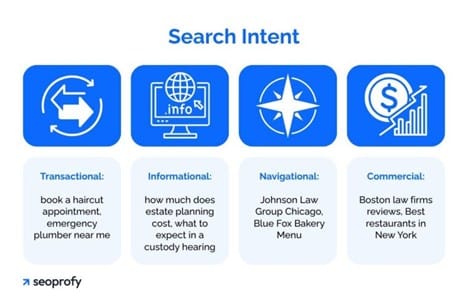
Think of keyword research as a strategic framework rather than a simple checklist. Your keywords should shape the purpose of each page and influence how your local services are presented across your website and business profiles. When your content clearly aligns with user intent and accurately reflects your services, AI systems are far more likely to recognize your relevance and feature your business in AI-driven local results.
Tip #3: Maintain Data Consistency Across Platforms
Consistence in your business information is critical. Key details such as your business name, address, phone number, operating hours, categories, and service descriptions should remain uniform across every platform where they appear.
Even small discrepancies can create confusion for AI systems when they cross-reference data, potentially weakening your credibility and visibility in local search results.
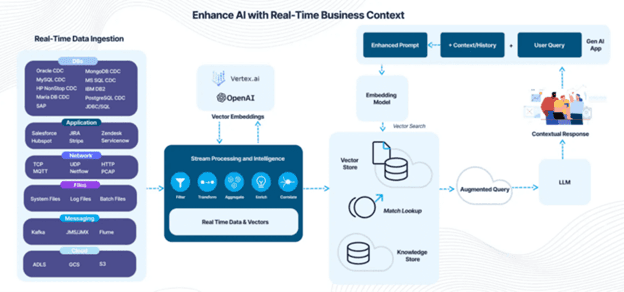
To maintain consistency and avoid data discrepancies, businesses should:
- Standardize their business name, address, and phone number (NAP) across all platforms.
- Align categories and service descriptions on every listing and profile.
- Ensure business hours and attributes are consistently updated everywhere.
- Monitor third-party directories for unauthorized or incorrect changes.
- Regularly audit listings to identify and fix inconsistencies.
Accurate and consistent information strengthens trust signals, making it easier for AI systems to validate your business and increasing your chances of appearing in AI-driven local search results.
Tip #4: Ensure Technical SEO Readiness
Technical SEO plays a crucial role in determining whether search engines and AI systems can properly access, interpret, and surface your website. In AI-driven search environments, having a clean technical foundation is essential, as these systems rely on precise signals to evaluate relevance and local context.
Common technical issues that can limit performance include inconsistent NAP data, poor site structure, weak crawlability, and missing or incorrect structured data. Problems like duplicate location pages, slow loading speeds, broken internal links, and lack of schema markup can make it harder for AI to accurately interpret your site.
Maintaining technical SEO requires ongoing audits and regular updates. While it can be time-intensive, it ensures your website remains accessible, reliable, and optimized always. When these fundamentals are in place, AI systems can more effectively understand and surface your business in local search results.
Tip #5: Validate Structured Data
Structured data provides a standardized way to organize and label information on your website, helping search systems clearly understand your content. Using schema markup, you can define key details such as your business type, services, location, and the relationships between different pages.
This added layer of context reduces ambiguity and improves how AI processes and interprets your information ultimately enhancing your visibility in AI-driven search experiences.
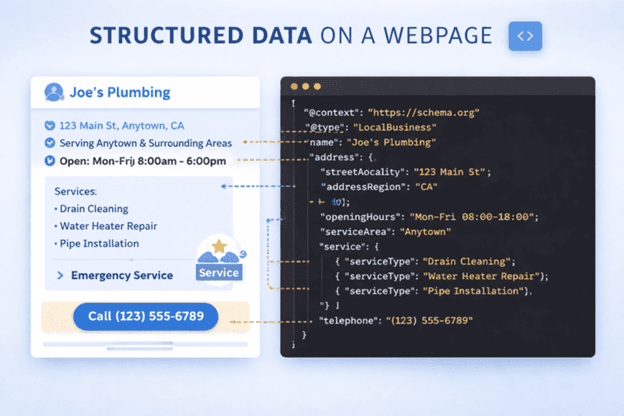
Clear and well-implemented markup is essential for AI-driven SEO. It enables AI systems to extract and interpret verified business information with greater precision.
Structured data provides machine-readable context about your business such as location, services, hours, reviews, and service areas. By implementing local business schema, you reduce ambiguity and help AI confidently match your business to relevant local queries. This significantly improves your chances of being featured in AI summaries, map results, and enhanced search experiences.
Well-maintained structured data also helps AI systems decide which information to prioritize when multiple sources are available. By clearly defining your services, locations, and attributes, you guide AI toward the most accurate and relevant details ensuring the right information is surfaced in local search responses.
Tip #6: Manage Customer Reviews Effectively
Customer reviews impact local visibility far beyond simple star ratings. They provide valuable insights into customer experience, service quality, and overall business reliability.
In AI-driven search, review content adds important context that helps strengthen your positioning. Just as important is how you respond. Timely, professional replies demonstrate accountability, reinforce trust, and help clarify any concerns that could influence perception.
As a best practice, aim to respond quickly and professionally to most reviews especially all negative ones and a majority of positive feedback. This consistent engagement signals credibility to both users and AI systems.
The platform where reviews are collected also matters. Different platforms carry varying levels of influence on visibility and trust. However, Google remains the most important review source across nearly all industries, followed by platforms like Facebook, with additional niche sites depending on your specific market.
Focusing on the right platforms and actively managing your reviews can significantly strengthen your presence in AI-powered local search results.
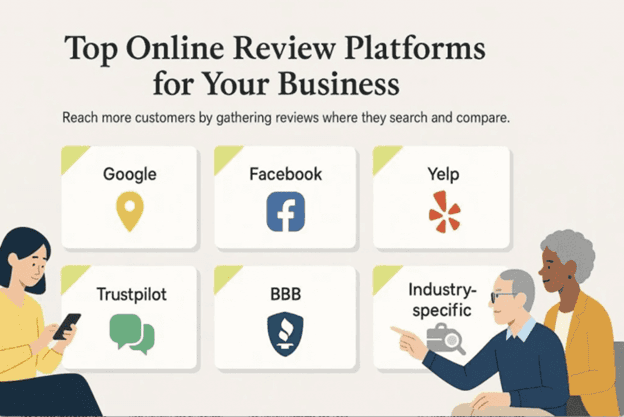
Customer review management should be approached as a structured, ongoing part of your broader local search strategy. When handled consistently, reviews contribute to long-term visibility and help maintain strong performance as search continues to evolve.
Tip #7: Engage with Your Local Community
Active involvement in your local community can significantly support your AI SEO efforts. It naturally generates mentions across trusted local sources, which act as strong signals for search systems.
Businesses that participate in their communities tend to earn more online references through event listings, partnerships, and local media which helps validate their presence within a specific geographic area.
Best practices for community engagement include:
- Participating in local events, charities, and organizations
- Partnering with nearby businesses and community groups
- Earning mentions on local news websites and event pages
- Sharing your community involvement across your own digital channels
- Keeping your offline activities aligned with your online presence
When multiple businesses offer similar services, strong community visibility can be a key differentiator. These local signals give AI systems more context to assess prominence, helping your business stand out in competitive local results.
Tip #8: Use an Answer-First Content Structure
An answer-first approach aligns closely with how AI systems generate and present information. Starting with a clear, direct answer helps establish relevance immediately and reduces ambiguity for both users and search systems.
From there, your content should expand naturally, anticipating related questions and guiding users deeper into the topic.
A highly effective structure works in layers:
- Beginning with a concise, direct answer
- Follow with a more detailed explanation
- Add supporting sections that address related or follow-up questions
It’s also helpful to structure pages around real user queries especially those that arise during sales conversations or customer interactions. Using clear subheadings that reflect these next-step questions allows AI systems to connect related queries more effectively.
This layered, intuitive format not only improves AI visibility but also enhances user experience by keeping visitors engaged and helping them quickly find the information they need.
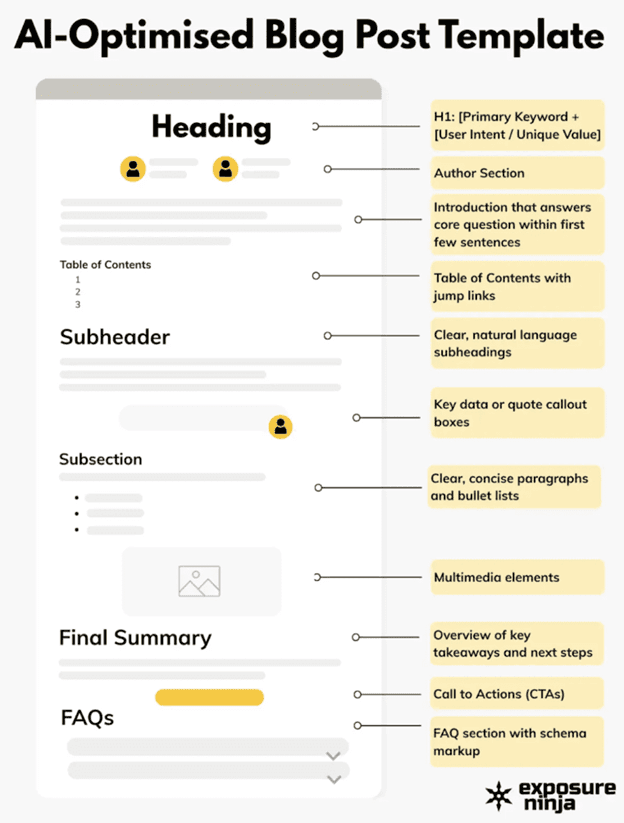
Concise, direct answers help establish immediate relevance, while expanded explanations and follow-up sections add depth and context. This layered content structure strengthens your local SEO strategy by aligning with how AI systems interpret, connect, and present information across search experiences.
Tip #9: Build Entity Mentions Beyond Your Website
In AI-driven search, an entity refers to a clearly defined and recognizable subject. For local businesses, this means your brand is consistently identified through key details such as your name, address, services, and associations across the web.
When your business information appears accurately and consistently on multiple trusted platforms, search systems are better able to recognize and validate it as a distinct entity, improving your visibility in local AI-powered results.
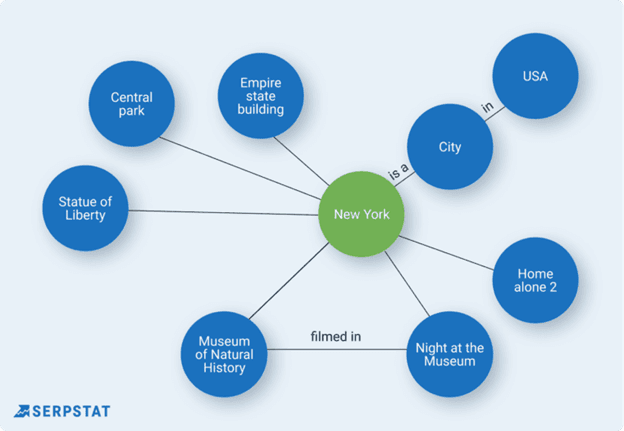
Entity mentions play an increasingly important role in AI-driven search because they help systems confirm relationships between your business and its environment. AI connects brands to people, locations, and services so having clear, consistent associations is essential.
For example, when a local HVAC company is consistently mentioned alongside its city or service areas, AI begins to associate that business with those locations. Strengthening these connections across directories, profiles, and PR mentions can also improve visibility in map-based results.
However, not all mentions are equally valuable. References from trusted local sources such as city or county websites, local news outlets, chambers of commerce, and established community organizations carry far more credibility than generic directories.
Mentions tied to real-world activities, like hosting events or participating in community initiatives, are especially impactful. They connect your business to authentic local signals and can drive both visibility and customer engagement.
Earning these mentions requires credibility, not just outreach. Instead of relying on large-scale link-building campaigns, focus on becoming a valuable and quotable source. Sharing original insights such as local pricing trends or seasonal demand data gives journalists and publishers a strong reason to reference your business.
For instance, a home service company can use its internal data to provide unique, data-backed insights to local media, resulting in organic brand mentions without paid placements.
Strong entity associations and credible local mentions improve how AI systems interpret your business’s relevance. When integrated into a broader AI SEO strategy, they help build long-term visibility and authority.
Tip #10: Monitor AI-Driven Metrics
In AI-powered search, traditional rankings are no longer the sole measure of success. Instead, businesses need to focus on visibility and engagement across multiple search touchpoints.
Key metrics to monitor include:
- Appearances in local packs and map results
- Inclusion in AI-generated answers
- Overall impressions and visibility trends
- Branded search growth
- Clicks, calls, and conversions
Today, success is less about where you rank and more about how often and where you appear across AI-driven experiences.
Tracking these signals provides a clearer understanding of real-world exposure and helps refine your local SEO strategy. Rather than focusing only on position, businesses should analyze visibility trends across AI surfaces and adjust their tactics accordingly.
Put AI-Driven Local SEO Into Action
AI Mode has fundamentally changed how local businesses are evaluated in search. Strong visibility now depends on a combination of clear entity signals, consistent data, solid technical foundations, and content designed for AI interpretation.
To succeed, businesses must align these elements into a cohesive local SEO strategy that reflects how modern search systems work.
Acting now can give you a significant competitive advantage. By adapting early and optimizing for AI-driven search, you position your business to stand out where it matters most right in front of your customers.

Mitesh Patel is the co-founder of 247 Digital Marketing, LawFirm Marketing and a columnist. He helps companies like Emerson and other top Fortune 500 compnies to grow their revenue.