
Key Takeaways
- Paid ads are not a dependable foundation for Peptide brands due to frequent restrictions and account risks.
- SEO builds a long-term asset that generates consistent, compounding traffic without ongoing ad spending.
- Organic search gives brands full control over their growth, independent of third-party platforms.
- Strong results require more than content technical SEO, keyword strategy, and authority building are essential.
- Early investment in SEO creates a durable competitive advantage that’s hard to replicate.
If you’re running a peptide brand, you’ve likely experienced the challenges of advertising firsthand disapproved campaigns, flagged accounts, or sudden policy changes that shut down revenue streams overnight.
For peptide ecommerce businesses, paid advertising often brings more uncertainty than stability. That’s why search engine optimization (SEO) has become the most dependable growth channel in 2026. Not because it’s trendy, but because it offers a scalable and sustainable path forward in a highly regulated industry.
Why Peptide Ads Are So Difficult to Scale
Peptide products frequently fall under restricted healthcare and pharmaceutical categories across major advertising platforms. Even when policies seem unclear, enforcement is becoming stricter.
Platform Restrictions
Google Ads heavily limits or bans campaigns tied to unapproved pharmaceuticals or certain supplements, especially compounds like semaglutide, tirzepatide, or peptides associated with weight management and performance claims.
Meta platforms follow similar guidelines, often flagging ads before they even go live due to potential health-related violations.
Increased Scrutiny (YMYL)
Peptide websites are classified under “Your Money or Your Life” (YMYL), meaning Google holds them to higher standards for trust, accuracy, and credibility. This makes compliance and authority essential not optional for visibility.
The Hidden Cost of Paid Ads
Even when peptide brands manage to run ads successfully, the economics can be unpredictable.
You’re Renting Traffic
Paid ads only deliver results while campaigns are active. Once spending stops, so does traffic. There’s little long-term value created.
SEO works differently. The content you build today can continue driving traffic and revenue for years, making it a long-term asset rather than a temporary boost.
Rising Costs
As competition increases in supplement and wellness space, cost-per-click continues to rise. Brands end up spending more just to maintain the same traffic levels, without building lasting value.
Account Risk
Ad-term suspensions can happen without warning, instantly cutting off revenue. This isn’t just a marketing issue it’s a serious business risk. Brands relying on organic traffic avoid this level of dependency.
How SEO Drives Sustainable Growth
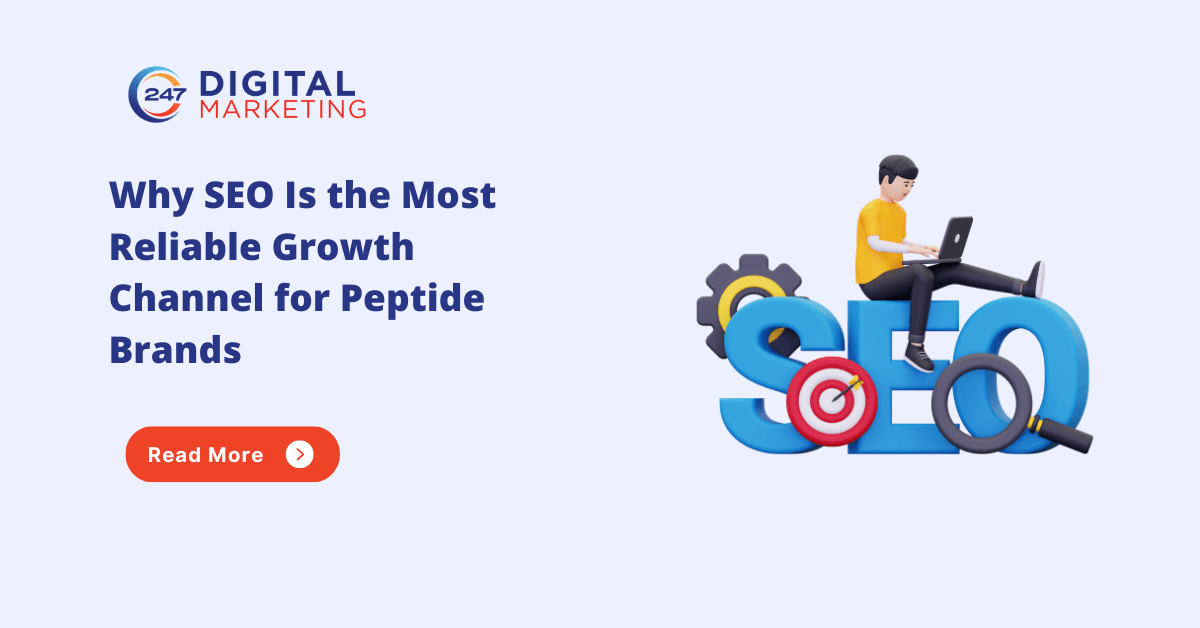
The core difference between SEO and paid ads is ownership. SEO allows you to build a foundation of content, rankings, and authority that continues to deliver value over time.
Own Your Audience
High-ranking pages consistently attract qualified visitors without ongoing costs. Instead of paying for every click, you invest in content once and benefit long-term.
Content Gains Value Over Time
Unlike ads, which stop performing when paused, SEO content improves as it earns backlinks, builds authority, and gains relevance. Pages targeting keywords like “anti-aging peptides” or “performance peptides” can generate steady traffic for months or even years.
Keyword Research: The Foundation of Growth
A strong keyword strategy is at the core of successful peptide marketing. With millions of monthly searches in this space, identifying high-intent, achievable keywords is critical.
Generic targeting isn’t enough. To achieve real results, brands need intent-focused keyword research aligned with their products and audience.
This is where specialized approaches like Peptide SEO Services make a difference, ensuring that every piece of content targets the right audience with the right intent.
The SEO Flywheel Effect
SEO creates a compounding growth cycle:
- Publish optimized content
- Build topical authority
- Earn backlinks
- Improve rankings
- Attract more traffic
Each step strengthens the next, making it easier to scale over time. Brands that invest early benefit the most, as their authority becomes increasingly difficult for competitors to match.
Real Growth Without Ads
One Peptide brand faced the common challenges: restricted ad channels and low organic performance. By focusing entirely on SEO technical optimization, content strategy, and authority building they transformed their growth.
Within six months:
- Over 1,300 keyword rankings
- 20+ top 3 positions
- Significant increase in organic traffic
- Hundreds of thousands in revenue driven by search
This kind of growth highlights the power of a well-executed Peptide Performance Campaign, where results are driven by long-term strategy rather than short-term ad spending.
Final Thoughts
For peptide brands navigating strict regulations and unreliable ad platforms, SEO stands out as the most stable and scalable growth channel.
By investing in Peptide Digital Marketing strategies that prioritize organic search, brands can build lasting visibility, authority, and revenue. Unlike paid channels, SEO doesn’t disappear overnight with it compounds.
In today’s landscape, Peptide Marketing isn’t just about visibility, it’s about control, sustainability, and long-term growth.

Mitesh Patel is the co-founder of 247 Digital Marketing, LawFirm Marketing and a columnist. He helps companies like Emerson and other top Fortune 500 compnies to grow their revenue.